Gain deeper Shopify insights with the Z-shaped attribution model
What is the Z-shaped attribution model?
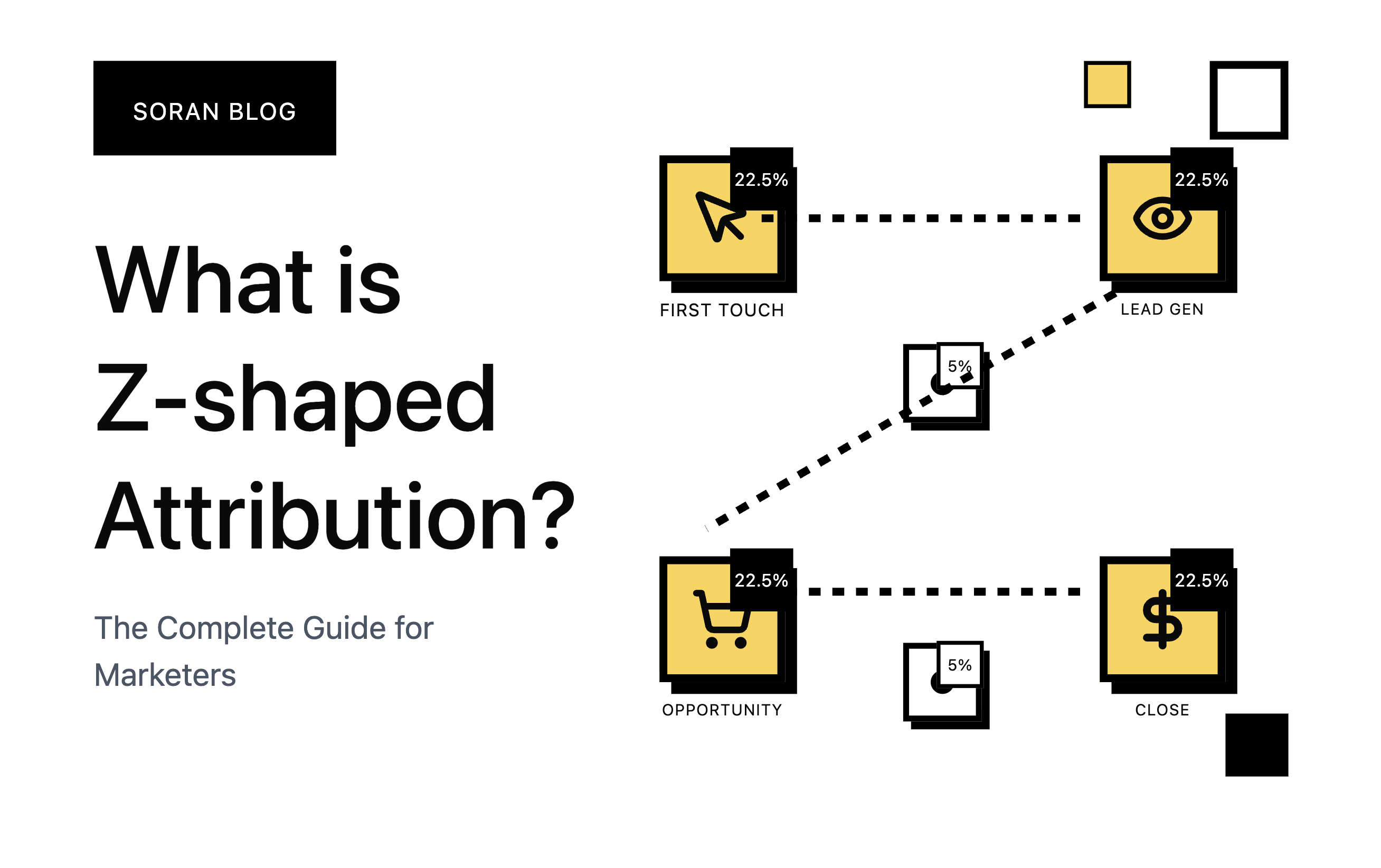
Understanding Z-shaped attribution is pretty straightforward. It highlights four key moments in a shopper's journey (First Touch, Lead-generation touch, Opportunity-creation touch, Customer close), giving each one 22.5% of the sales credit. The final 10% is then split equally among every other interaction.
How does Z-shaped attribution work for your Shopify store?
So, which four moments get that sweet 22.5%?
-
First touch: This is the very first time a shopper discovers your brand. Did they click a Facebook ad showing off your new t-shirt line? Did they find your store through a Google search for "best eco-friendly candles"? That initial spark of awareness gets 22.5% of the credit. After all, if they never found out about your awesome products, there’d be no sale!
-
Lead-generation touch: The second major interaction happens when a casual browser becomes a potential lead. On Shopify, this usually involves a value exchange: the shopper gives you something (like their email address) in return for something valuable (like a 10% off coupon code, a "back in stock" notification, or early access to a new collection). This step is crucial because it's when you get permission to market to them directly. If you can’t get prospects to willingly join your email list, it's tough to nudge them toward a purchase.
-
Opportunity-creation touch: The third touchpoint marks a serious sign of purchase intent. For a Shopify store, this isn't usually a demo sign-up, but something like adding an item to their cart, starting a checkout, or signing up for a product waitlist.
Example: A customer who already signed up for your email list clicks a targeted promotion for a "Buy One, Get One 50% Off" sale in their inbox, and then proceeds to add two items to their cart. That action of adding to the cart counts as the opportunity-creation touch, showing they are highly motivated to buy.
-
Customer close: Finally, the last touchpoint before the sale is completed. This is the very last interaction a customer has with your brand before they click "Place Order." It could be them clicking a "Free Shipping" reminder email, seeing a retargeting ad on Instagram, or even coming directly back to your store from a saved tab. While it might seem like a formality, it’s the final push that seals the deal, so it earns 22.5% of the credit.
In short, four critical stages in the Shopify customer journey receive 90% of the credit, with the remaining 10% split among everything else.
What does this mean for your Shopify marketing strategy?
The main point of using attribution is to guide your future ad spend. A Z-shaped model helps you pinpoint which of your marketing efforts are truly driving sales. Over time, it will highlight specific channels, like your Klaviyo email flows, your TikTok Shop ads, or your Google Shopping campaigns as being particularly effective at those four key stages.
Important: Always compare the revenue brought in with the cost of the campaign. It’s easy to look at the revenue from a new series of expensive influencer partnerships and think they’re amazing. However, if those partnerships cost more than the profit they generated, you have a skewed view of their effectiveness. Don't just focus on the sale; focus on the cost-per-acquisition (CPA) for those key touchpoints.
How do you set up Z-shaped attribution on Shopify?
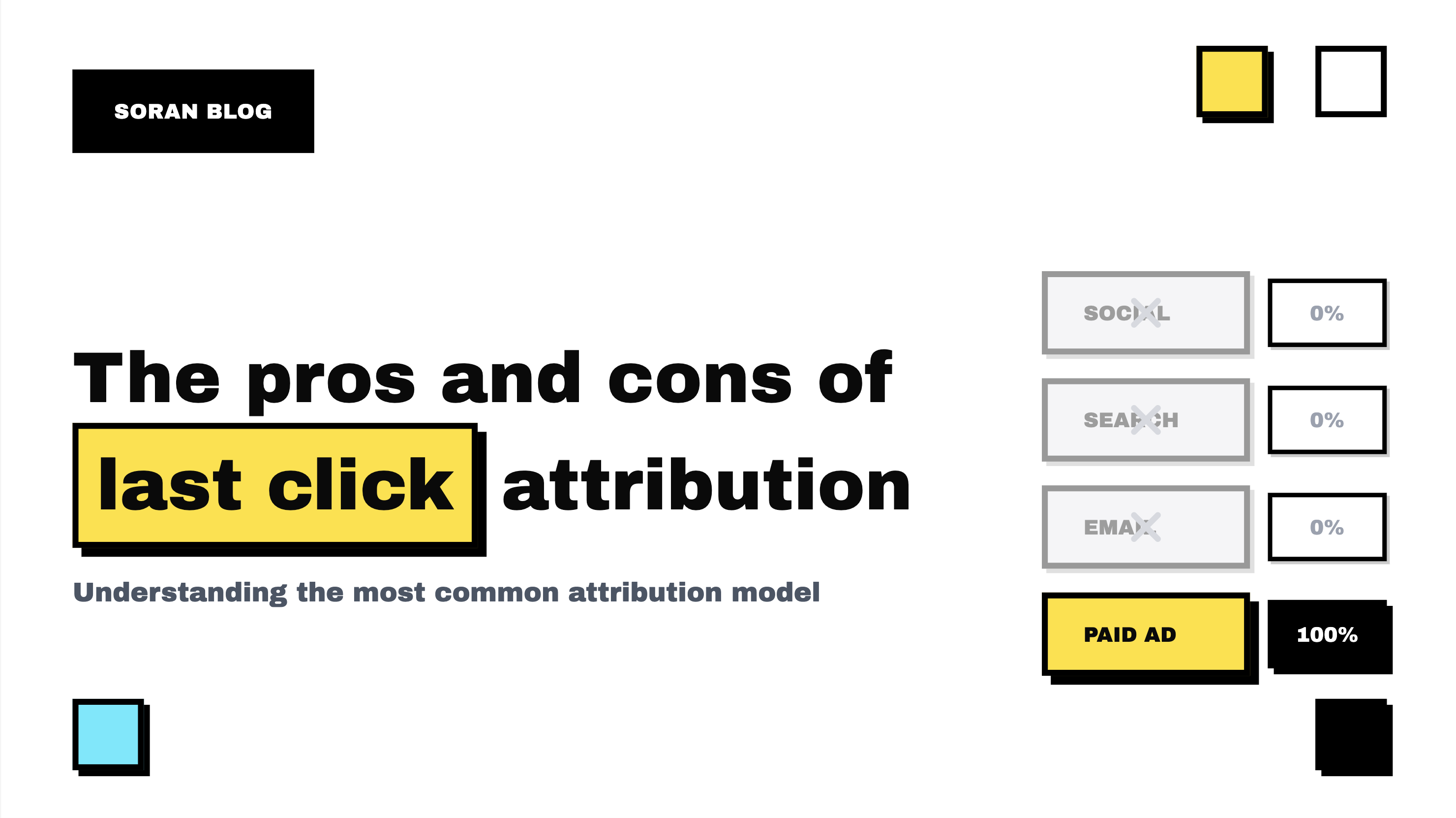
To use a Z-shaped model, your tracking needs to be set up for multi-touch (not just "last-click," which is common). Many basic Shopify analytics tools default to last-click, so you'll likely need a dedicated multi-touch attribution app or platform that can handle this specific calculation (i.e Soran).
The software needs to follow the Z-shaped math:
- 22.5% to the First Touch: The first visit/click (easy to identify).
- 22.5% to the Lead-Generation Touch: When the shopper first exchanges contact details for value (e.g., email sign-up for a coupon).
- 22.5% to the Opportunity-Creation Touch: When the shopper shows strong intent (e.g., adding to cart, starting checkout).
- 22.5% to the Final Touchpoint: The last click/view before the purchase.
- 10% split amongst all other interactions between these four key points.
A quick note for newer stores: If your sales cycle is typically short (shoppers buy quickly) or if you're a small store with few conversions, it might take a while to see the full benefits of a Z-shaped model. If you switch from a simple last-click model, you can’t retroactively assign credit to past customers. You'll have to wait until a customer goes through the entire new, tracked journey (from awareness to purchase) before the model can give you its full, accurate picture.The pros of using a Z-shaped attribution model
Z-shaped attribution checks a lot of boxes for modern e-commerce. It’s multi-touch, meaning every interaction, from liking your product announcement on Instagram to reading your FAQ page is considered. This is a massive improvement over models that only give 100% of the credit to a single, arbitrary interaction (like the last click).
It’s the best way to understand how your entire marketing ecosystem works together: how your ads pique interest, which emails push them to sign up, and what finally motivates them to hit 'buy.'
The model is also great at distributing credit without requiring a team of data scientists. Marketers are always guessing which touchpoints truly had the most influence. Z-shaped attribution simplifies this by making a common-sense assumption: the most crucial stages of the funnel: awareness, lead conversion, intent, and closure are the most important.
If your customers typically go through these four stages, this formula is highly effective. You can't sell to them if they don't know you exist (awareness), you can't nurture them easily if you don't have their email (lead), and they won't convert if they don't show strong intent (opportunity).The cons of using a Z-shaped model
Disadvantages of the Z-shaped attribution model
While it's one of the best models out there, Z-shaped attribution isn't perfect. The way it splits credit can sometimes lack nuance. A customer's journey is rarely a simple "Z" shape.
Example: A shopper might initially find your store through a cold TikTok ad (First Touch) but find your website slow and leave immediately. A month later, you launch a new collection and send out a highly successful SMS campaign. The shopper clicks the SMS link, loves the new products, and buys.
In this scenario, the First Touch (TikTok Ad) was actually negative or ineffective, yet the Z-shaped model gives it 22.5% of the credit. Meanwhile, the highly effective SMS link—the one that actually brought the customer back and converted them would be lumped into the final 10% pool with every other small interaction.
We, as marketers, can't make blanket assumptions about how important any single touchpoint is.
Example: A shopper clicking a minor link in your blog post footer might seem insignificant, but what if that link led them to an amazing customer review page that convinced them to buy your highest-priced item? The Z-shaped model would dilute the credit for that key review page link within the 10% pool.
In defense of the Z-shaped model, it's nearly impossible to know exactly how much influence each touchpoint had. But its biggest flaw is that the credit apportionment is too formulaic, lacking personalization based on the individual, messy, non-linear buying journey.
Who should and shouldn't use a Z-shaped attribution model?
Z-shaped attribution is perfectly suited for businesses with long, complex sales cycles where customers need time and multiple interactions before they buy. If you sell high-value items (like custom furniture, high-end electronics, or annual subscriptions) where shoppers browse for weeks and engage with emails, ads, and social media before converting, this model is fantastic.
If your customers usually buy your product the first time they see it (impulse buys or low-cost items), a Z-shaped model might be overkill. It assumes there will be at least four key, distinct touchpoints in the journey. If your customers convert after one or two clicks, the value of this complex model is pretty much wasted.
Conclusion
The Z-shaped model moves beyond Last-Click to credit four crucial customer journey stages (First Touch, Lead Gen, Opportunity, Close) with 22.5% each, forcing investment across the entire funnel. While powerful, its fixed percentages can misrepresent complex, non-linear buying paths. The model is best suited for businesses with long, multi-stage sales cycles, offering actionable data for optimizing ad spend. For low-cost, immediate purchases, simpler models may suffice. Use Z-shaped attribution as a strategic guide, not a rigid rule, to make better marketing investments.