The Pros and Cons of Last Click Attribution
Figuring out if your marketing is actually doing anything, and understanding the wild, twisty road your customers take before buying, basically boils down to marketing attribution. It's like giving high-fives (or, well, credit) for a sale to all the different marketing channels that played a part. This lets you stop guessing and start making smart, data-backed moves. But honestly, with a gazillion things a customer might see before hitting "BUY" trying to pin down the real hero of the sale is messier than a toddler's birthday party.
That's where the mighty attribution models swoop in. Tools like Google Ads and Google Analytics let you pick and choose models based on your brand's ultimate goals. (P.S. Over in your Soran dashboard, you also get to fiddle with different attribution settings to see how those advertisements are really performing.)
In this blog post, we're going to get up close and personal with the last-click attribution model. We'll talk about its good sides, its not-so-good sides, and how it's going to shake up your online store's marketing game.
What is Last-Click Attribution?
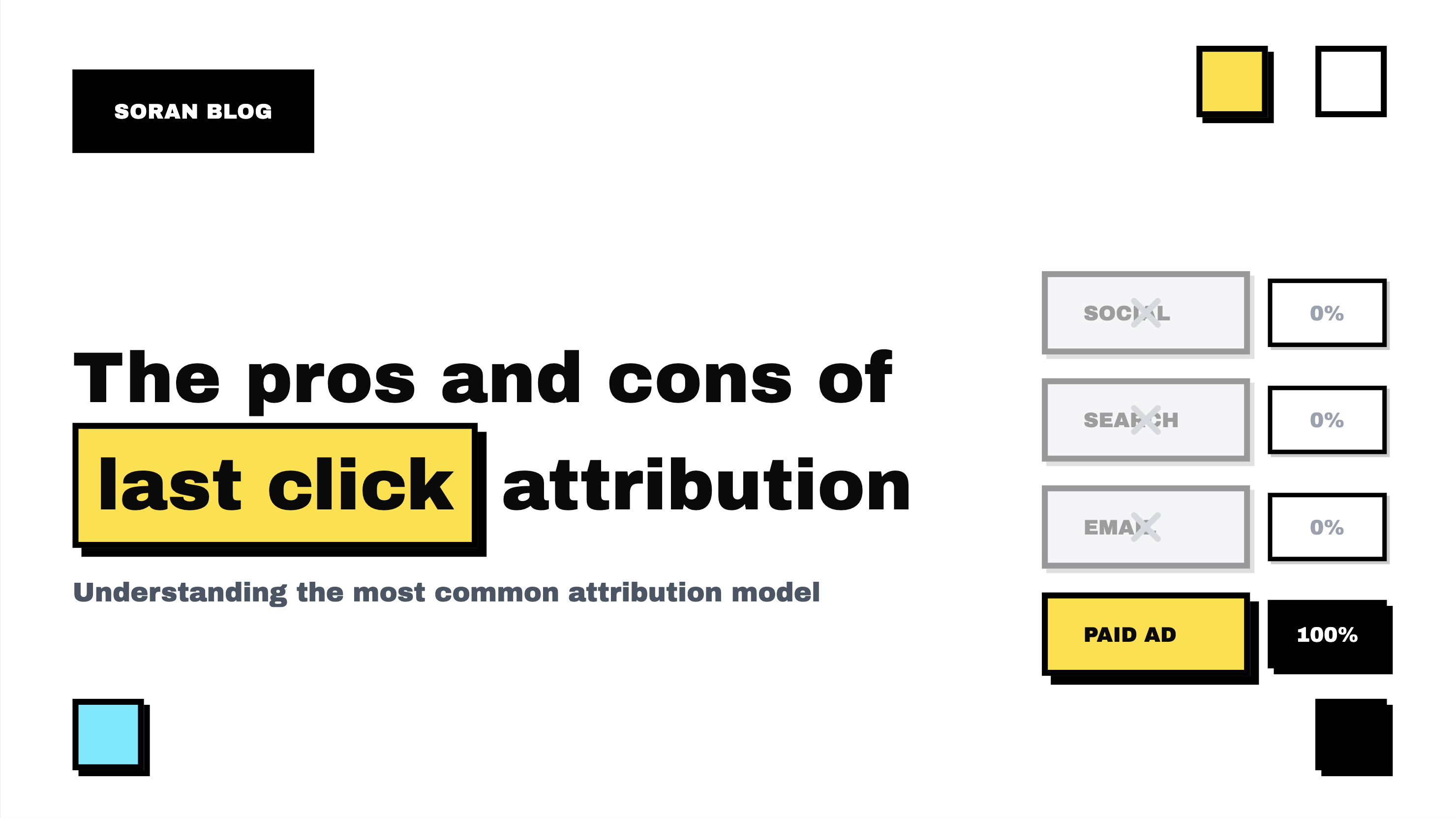
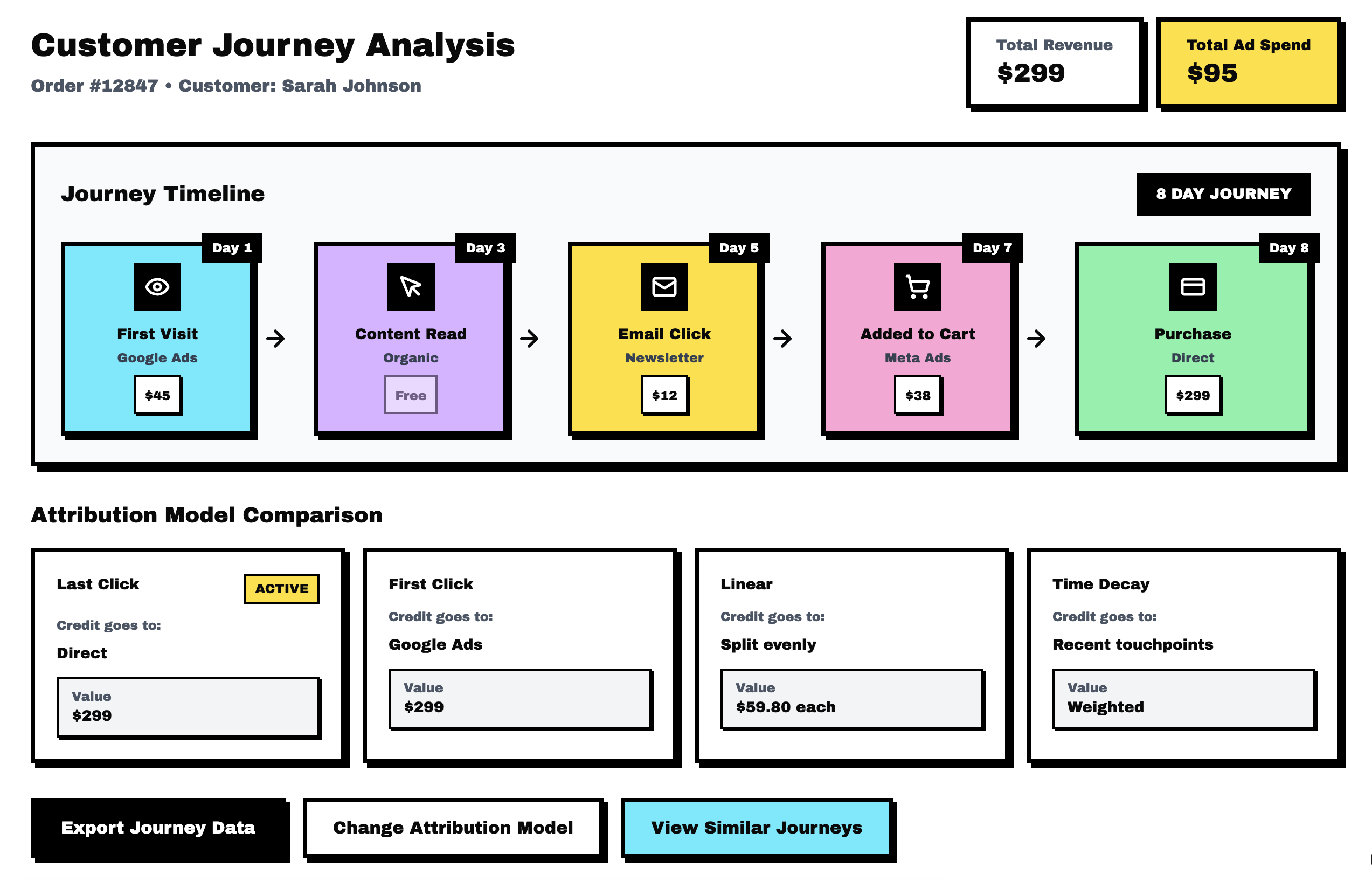
Last-click attribution assigns full credit for a conversion to the final customer touchpoint before the conversion occurred. This could be the last advertisement clicked or another interaction point, like a marketing email. For instance, in a scenario where a user interacts with a Google PPC ad, then a marketing email, and ultimately a social media ad on Facebook before converting, the Facebook ad receives 100% of the conversion credit.
First-Click vs. Last-Click attribution
Another key way to look at how credit for a sale is given is through first-click attribution. Think of it this way: While last-click attribution says the last thing a customer interacted with gets all the glory, first-click attribution gives the props to the very first touchpoint. Basically, they're two opposite methods for deciding which stop on the customer's journey deserves credit for the final purchase.
For instance, say someone first saw your brand in a Facebook ad, then later clicked a link in a blog post, and finally bought something after searching for your company on Google. With first-click attribution, the Facebook ad gets the credit. Last-click attribution, however, would give all the credit to the Google search.
Pros of Last-Click attribution
-
Directly Pinpoints Sales Drivers
A major benefit of last-click attribution is its ability to clearly identify which touchpoints lead directly to conversions. By assigning all credit to the final click before a sale, businesses can easily determine which channels and campaigns are most effective in closing the deal.
-
Clarifies the Final Conversion Step
Beyond just identifying the converting click, this model helps analyze the very last step in the customer's purchase journey. It provides insight into the final stimulus that drove the purchase—was it a customer testimonial video or a product comparison with a competitor? This is particularly valuable for businesses with complex sales funnels or diverse offerings.
-
Simplicity and Ease of Implementation
Last-click attribution is remarkably straightforward. The process is simple: a customer clicks an ad and converts, and that same ad receives the credit. Because the model focuses only on the final interaction, setting it up is easy, as there is no need to track and weigh multiple earlier touchpoints in the user's path.
Cons of Last Click attribution
Last-click attribution, while simple, presents several significant cons for marketers seeking a holistic view of the customer journey:
-
Ignores the Complete Customer Path to Conversion
The fundamental flaw of last-click attribution is its narrow focus. By crediting only the final touchpoint, it entirely disregards the preceding steps of the customer journey, particularly the crucial awareness and consideration phases. This model effectively labels every interaction before the last one as "irrelevant," leading to an incomplete understanding of how different marketing channels truly collaborate and contribute to the final conversion.
-
Skews Marketing Investment and Strategy
Solely assigning credit to the last touchpoint can result in a dangerous misallocation of advertising spend. Businesses may over-invest in channels that generate bottom-of-the-funnel clicks, because those are the ones getting the credit, rather than understanding and funding the efforts that effectively bring new customers into the funnel in the first place. While these final clicks are necessary for closing a sale, an exclusive focus on them obscures the upstream marketing efforts essential for long-term customer acquisition and funnel health.
Reporting in Google Analytics
Google Analytics provides an attribution report for comparing your acquisition channels. You can access this report through the Conversions > Multi-Channel Funnels > Model Comparison Tool.
This tool is useful for two main purposes:
- Viewing Conversions by Attribution Model: It lets you analyze your conversions based on the specific attribution model you choose.
- Comparing Model Performance: Within the same report, you can compare how your eCommerce store performs under different attribution models, such as comparing the last-click (Last Interaction) model with the first-click (First Interaction) model.
Reporting in Soran
A highly valued feature of Soran is the ability to track a customer's complete journey through the conversion funnel, which can be viewed under Customers > Customer Journeys. This provides a broader perspective on the overall conversion process. Furthermore, this feature reveals the total number of conversions for a specific path (such as a sequence from a Facebook ad to a PPC ad), helping you understand the contribution of each individual ad interaction to the bigger conversion picture.
Last-click attribution isn’t perfect.
A key challenge in digital marketing is accurately connecting conversions back to the specific marketing activity that influenced them. This is vital for advertisers to scale their brand and understand the Return on Investment (ROI) from their paid advertising. Ultimately, effective investment requires knowing which platforms are most influential.
However, no attribution model is flawless, and each, like the "last click" model, comes with its own advantages and disadvantages. It is the advertiser's responsibility to select the model that best aligns with their brand's strategy and most accurately reflects the true story of their marketing performance.