Everything you need to know about W-shaped attribution model
What is W-Shaped attribution model?
Ever wonder which of your marketing efforts actually makes a customer decide to buy? That's where the W-shaped attribution model comes in handy.
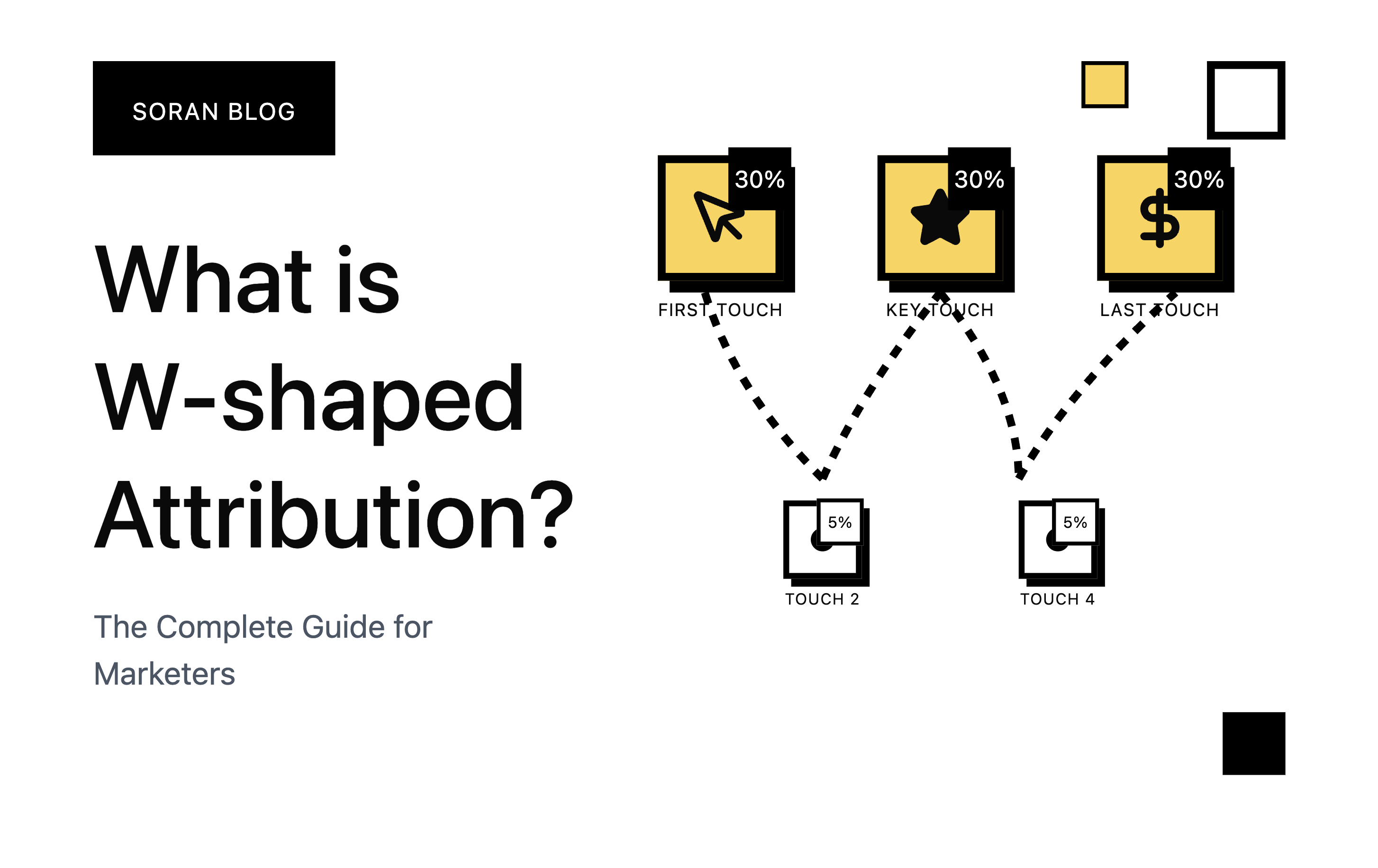
Think of it like giving credit where credit is due. This model assumes a few key interactions, or "milestone touchpoints," are the most influential:
- First Awareness: The moment a customer first learns about your brand. (Example: Seeing your viral TikTok video.)
- Opportunity Creation/Lead Generation: When a customer shows serious interest and gives you their info. (Example: Signing up for your email list or a free demo.)
- Conversion: The final purchase!
The W-shaped model basically says, "These three 'W's—Awareness, Lead, and Purchase—are the most important stops on the journey." It helps you figure out where to spend your marketing money by highlighting the campaigns that truly move the needle.
Advantages of the W-Shaped attribution model
-
Skips the confusing stuff like "first-touch" or "last-touch" attribution. The W-shaped model is way smarter because it looks at the whole customer journey. Seriously, a cool social media video might catch someone's eye, but let's be real, most people snoop around a bit more before hitting that "buy" button.
-
W-shaped attribution breaks things down into: "You saw us," "You thought about us," and "You bought from us." By giving props equally to campaigns at each of these stages, you get to use so much more of your valuable data!
For example, if you just focused on "last-touch," you might obsess over checkout page conversion rates and completely miss how well your initial "brand vibe" podcasts are actually working. W-shaped modeling forces you to dig into those early awareness efforts to see which messages are truly driving folks to your website.
Bonus: W-shaped attribution is pretty straightforward to figure out. You don't need a math degree! Just use your past data and customer journey maps to pinpoint the moments that really seal the deal.
Disadvantages of the W-Shaped attribution model
The W-shaped attribution model has a few drawbacks:
- It might oversimplify success. This model can give too much credit to the very first touchpoint (opportunity/brand awareness) and the very last one (conversion), potentially inflating the value of those campaigns.
- A company spends heavily on a single viral video. The W-shaped model might give that video a huge chunk of credit, even if later, more targeted ads were actually the key to closing the sale.
- It's bad for quick purchases. If your product has a short sales cycle (people buy fast without much research), the W-shaped model is overkill. There simply isn't a long "consideration stage" to credit.
- For example a food delivery service. The customer sees an ad (Awareness), opens the app (Consideration), and orders immediately (Conversion). Applying a heavy 30% credit to the middle "consideration" stage is nonsensical when the process is so fast.
- It ignores customer retention. This model focuses heavily on getting new customers, but it often fails to properly value the marketing efforts that keep existing customers coming back (retention/loyalty programs).
- An email campaign offering a special discount to previous buyers. The W-shaped model might undervalue this campaign because it's not focused on new opportunity creation or the final new conversion, even though it's crucial for lifetime value.
Use cases and examples
The W-shaped attribution model is great for understanding ad success, especially if your sales process is complex with multiple people involved (like in B2B). It's more accurate than simpler models for longer sales cycles.
Think about a custom enterprise resource planning (ERP) system provider. Selling a new ERP system means getting approval from IT, finance, and operations leaders. The whitepapers, case studies, and personalized demos you create are crucial during the evaluation stage, and W-shaped attribution gives credit where it's due for those key touchpoints.
This model also highlights the importance of campaigns that create demand. Sometimes clients don't know they have a problem your solution can fix. Your ads can reveal that need, prompting them to explore your brand. W-shaped attribution ensures these specialized, high-impact campaigns get the recognition they deserve for contributing to the final sale.
Conclusion
Single-touch attribution is too basic. W-shaped attribution gives credit where it's due across all your marketing efforts, helping you really see how customers discover and choose you. It's perfect if your sales cycle is long with many touchpoints. It's simple to calculate, gives you a clearer view of your marketing ROI, and helps you decide where to spend your budget and what messages and channels work best.