What is multi-touch attribution?
 Multi-touch attribution is a way for marketers to see which ads or channels helped make a sale. Instead of giving all the credit to one ad, it looks at every step a customer took, like seeing an Instagram ad, clicking an email, or visiting the website and gives each one a bit of credit for helping make the sale happen.
Because people don’t always act the same way, there isn’t one perfect way to measure what caused a sale. Different multi-touch attribution methods give credit to channels in different ways, so each marketer can decide how they want to split the credit.
The difference between multi-touch and multi-channel attribution
People often mix them up, but they’re not the same thing.
-
Multi-touch attribution looks at all the steps a customer takes before buying something and splits the credit between those steps, no matter which channels were used.
-
Multi-channel attribution focuses on how different marketing channels, like email, social media, or search, work together to make a sale. It might still give all the credit to just one channel, depending on how it’s set up.
Multi-touch vs. single-touch attribution models
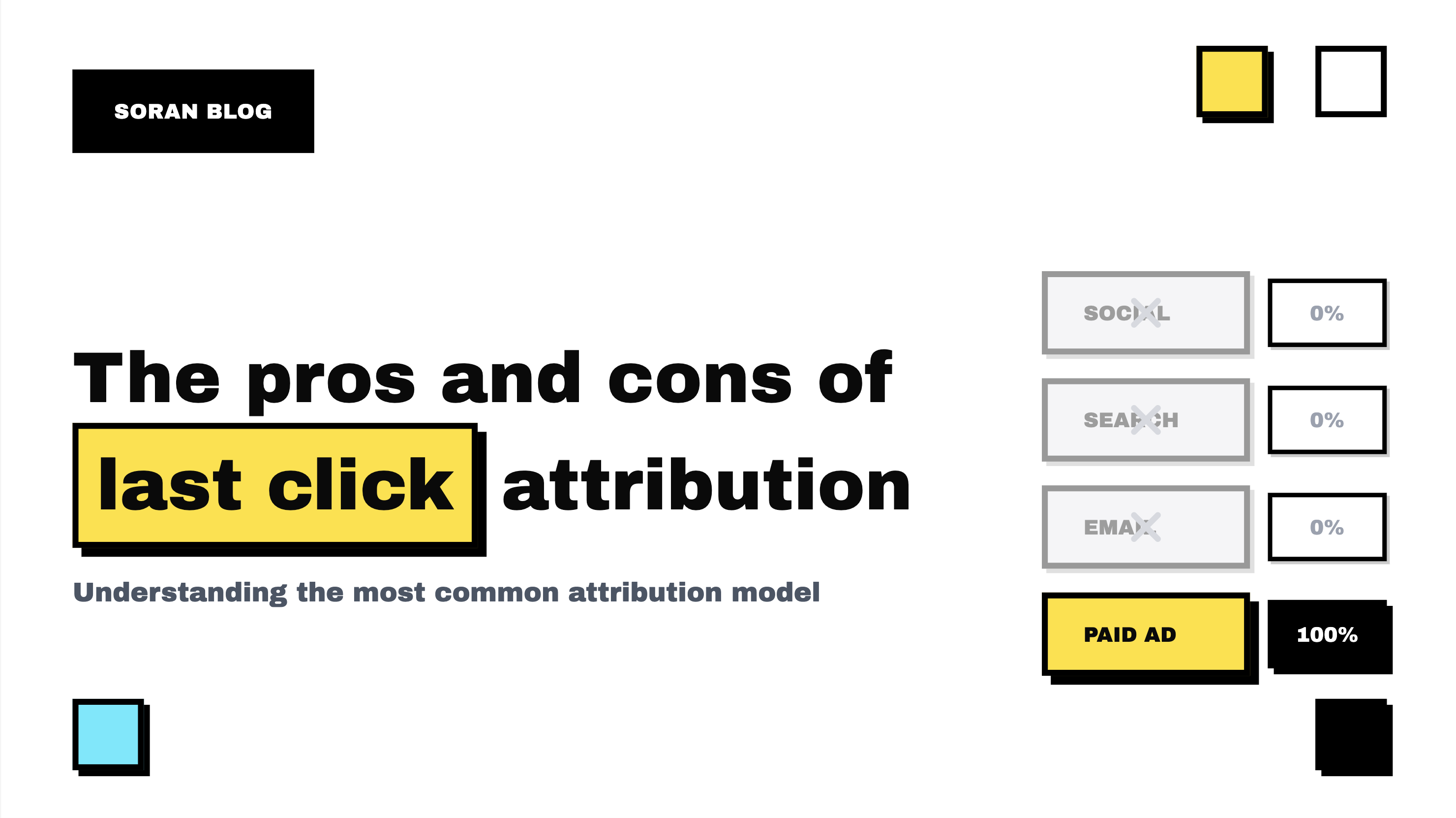
Single-touch attribution gives all the credit for a sale to just one step, like the first or last ad a customer saw. It’s easier to set up, but it oversimplifies how people actually make decisions and can cause marketers to spend money in the wrong places.
Types of multi-touch attribution models
Not all multi-touch attribution models are the same. Each one looks at the steps a customer takes differently to figure out which ones helped make a sale. Here are the most common types:
1. Linear attribution model
The linear attribution model splits credit evenly across all customer interactions, from the first touch to the final purchase. It’s simple and easy to use but doesn’t consider that some steps might matter more than others.
2. Time decay attribution model
The time decay model gives more credit to interactions that happen closer to the sale, assuming recent actions have a bigger impact. It’s like how you’re more likely to remember the last ad you saw before buying something than one you saw a month ago. The downside is that it can miss the early steps that first sparked your interest.
3. Position based attribution model
-
U-shaped attribution
The U-shaped model gives 40% of the credit to the first and last interactions, while the middle steps share the remaining 20%. It’s great for businesses that want to focus on both attracting new customers and closing the sale.
-
W-shaped attribution
The W-shaped model gives 30% of the credit to three key points: the first touch, when a lead is created and the final conversion. The remaining 10% is shared among the other interactions. It’s a good fit for B2B companies with clear lead generation steps.
-
Z-shaped attribution
The Z-shaped model, or full path attribution, adds “opportunity creation” to the W-shaped model. It gives 22.5% credit to first touch, lead creation, opportunity creation and conversion, with 10% shared among other interactions. It’s ideal for complex B2B sales with long cycles.
4. Algorithmic attribution models
The algorithmic attribution model uses machine learning and statistical analysis to give credit based on how much each touchpoint actually influences a sale. Two common types are:
- Fractional attribution: Gives partial credit based on each touchpoint’s real contribution.
- Incremental attribution: Measures how much each touchpoint boosts conversions compared to if it wasn’t there.
5. Data-driven attribution model
Data-driven attribution, like algorithmic attribution, uses machine learning to study patterns across many customer journeys. Unlike rule-based models, it lets the data decide how much credit each touchpoint really deserves for driving conversions.
Conclusion
Multi-touch attribution is a smarter way to see which ads and marketing steps actually help make a sale, instead of just giving all the credit to one thing. There’s no single "best" method, what works for you depends on your business, how your customers buy, and how much data you can track.